

PRODUCTS CENTER

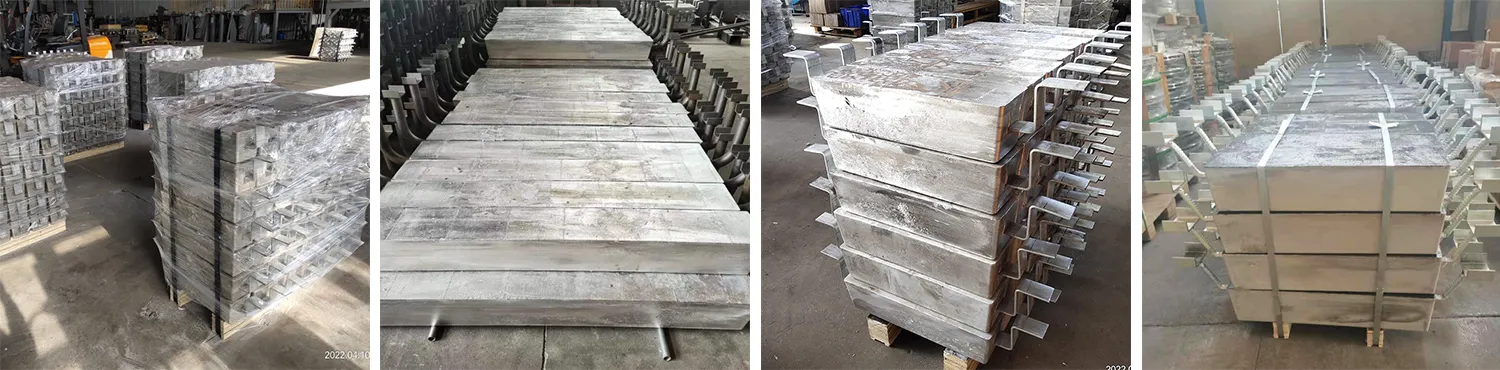
central africa Sacrificial anode
Category:
Product Description
Sacrificial anode is a technology that utilizes the principle of electrochemical primary cell for metal corrosion protection. The basic principle is to connect the metal with negative potential (called sacrificial anode) with the protected metal structure to form a primary cell system. In the primary cell, the sacrificial anode, as the negative pole, undergoes an oxidation reaction and is gradually consumed, thus protecting the protected metal, as the positive pole, from corrosion.
Principle of Sacrificial Anode
The protection principle of sacrificial anode is based on the electrochemical primary cell theory. When two metals with different potentials come into contact in an electrolyte (e.g., soil or water), the metal with the lower potential (the sacrificial anode) becomes the negative pole and undergoes an oxidation reaction, while the metal with the higher potential becomes the positive pole and is protected.34 For example, when zinc, magnesium, or aluminum alloy is connected as a sacrificial anode to an iron or steel structure, the zinc, magnesium, or aluminum alloy will corrode in preference to the other metal, thereby protecting the the steel structure from corrosion.
Materials for Sacrificial Anodes
Commonly used sacrificial anode materials include magnesium, magnesium alloys, pure zinc, zinc alloys and aluminum alloys. These materials have sufficient negative potential to corrode preferentially in the electrolyte, thereby protecting other metal structures. For example, magnesium anodes have a potential of -1.6V, aluminum anodes -1.1V, and zinc anodes -1.05V, all of which are lower than the -0.6V of steel and therefore provide effective protection.
Application Scenarios of Sacrificial Anode
Sacrificial anode protection method is widely used for anti-corrosion of various metal structures, including:
Oil, petrochemical, natural gas transmission pipelines and storage tanks: preventing corrosion of pipelines and storage tanks.
Harbors, bridges, ships: to protect underwater and exposed metal structures.
Submarine cable pipelines: protection of submarine equipment from seawater corrosion.
Water treatment plants, petrochemical plants, oil refineries: protect metal structures of various industrial equipment.
Sluice gates, reservoirs: to protect the metal parts of hydraulic buildings.
Advantages of sacrificial anode:
No need of external power supply: sacrificial anode protection method does not need external power supply, which reduces energy consumption and maintenance cost.
Wide range of application: applicable to the protection of metal structures in various soil and seawater environments.
Get a Free Consultancy
Please leave your contact information and we will arrange for an expert to contact you.
Sales
Tel:+86-533-3436188
Fax:+86-533-3436918
Phone:+86-18253307807 (Mr. Huang)
+86-15898723612 (Manager Du)
Add
Yuezhuang Industrial Park, Yiyuan County, Zibo, Shandong, China